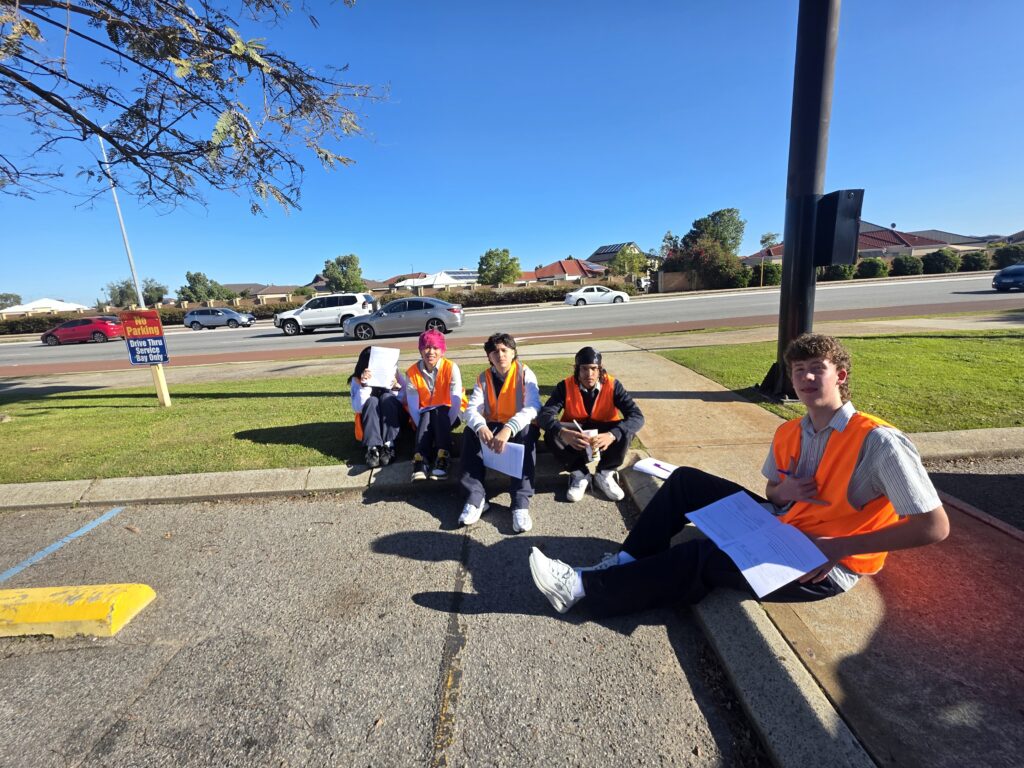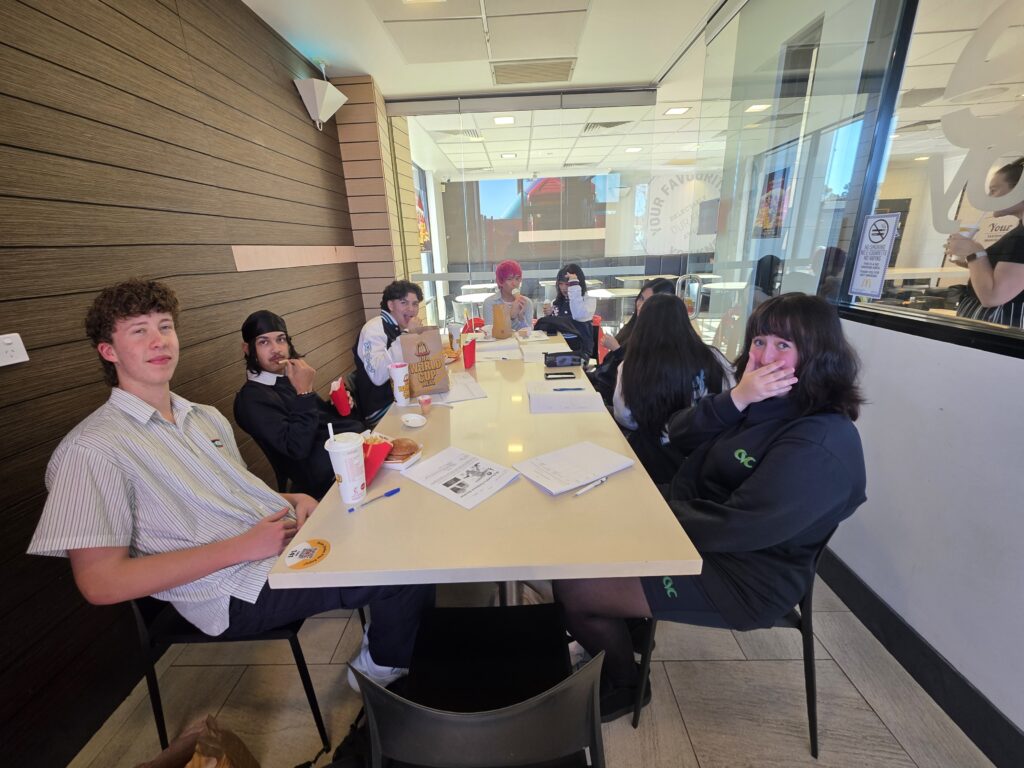
Year 12 General Geography students recently took part in an engaging fieldwork excursion to McDonald’s Livingston in Canning Vale, applying their geographical skills in a real-world setting.
As part of their assessment, students walked to the local restaurant and spent time investigating how a large multinational company operates at a local scale.
During the visit, students conducted interviews with the store manager, completed customer surveys, and observed store processes in action.
A key focus of the excursion was understanding the processes involved in delivering fast food, with students analysing the sequence of events from when an order is placed through to when it is received. This hands-on experience allowed students to construct flowcharts and better understand efficiency, technology, and customer service in a fast-paced environment.
Students also collected data by observing customer patterns inside the restaurant and at the drive-through. Using tally charts, they recorded information about different customer groups, including families, teenagers, workers, and delivery drivers. This activity helped students develop valuable data collection and analysis skills, forming the basis for further in-class investigation.
Another important aspect of the excursion was evaluating the social, economic, and environmental impacts of McDonald’s. Students considered how the business contributes to local employment and economic activity, while also reflecting on broader issues such as sustainability, waste, and community perceptions.
Through examining the store’s layout, target market, and branding, students gained insight into how businesses adapt to meet the needs of different consumers. They also explored career pathways within McDonald’s, gaining a better understanding of employment opportunities and progression within the hospitality industry.
The fieldwork extended beyond the visit itself, with students analysing the spatial distribution of McDonald’s stores across Perth and investigating why some communities resist new developments. Case studies, such as community opposition in Applecross and Guildford, highlighted how factors like traffic, noise, environmental concerns, and local identity influence planning decisions.
This excursion provided students with a valuable opportunity to connect classroom learning to the real world. By collecting and analysing primary data, students strengthened their geographical inquiry skills and developed a deeper understanding of how global businesses operate within local communities.
“It was a beneficial opportunity to see how McDonalds works from a business point of view,” one of the students told us.